Written by Seth Rutner — founder of AvoSquado and a travel agent who’s coordinated group trips across 50+ countries, from 12-person Día de los Muertos adventures in Oaxaca to annual ski trips where someone always forgets to book their lift ticket.
The Group Chat Is Not a Trip Planner
Every group trip starts the same way. Someone drops a message: “We should do a ski trip this year.” Fifteen people react with fire emojis. Then nothing happens for three weeks.
Eventually the one organized friend — you know who you are — starts a new thread: “OK so dates. Who can do February?” And that’s when the chaos begins. Half the group responds in the chat, two people text separately, someone replies to the wrong thread, and the person who suggested the trip in the first place goes silent.
I’ve been that organized friend more times than I can count. I’ve planned group trips to Whistler, Niseko, Oaxaca, Sayulita, and dozens of other places. I’ve used Google Docs, spreadsheets, shared notes, WhatsApp groups, and at one desperate point, a printed PDF that I handed out at the airport. None of it works well once you’re past about six people.
That’s why I built AvoSquado. But this post isn’t a sales pitch — it’s about what actually goes wrong when groups try to plan trips, and why a dedicated tool (any dedicated tool) beats the group chat.
The Real Problems With Group Trip Planning
Most trip planning advice focuses on the fun stuff: where to go, what to do, where to eat. Nobody talks about the logistical nightmares that actually kill trips before they happen.
Problem 1: Information Gets Buried
The Airbnb address is somewhere in the chat. So is the WiFi password. And the check-in code. And the dinner reservation time. Good luck finding any of it when you’re standing at the front door at midnight after a four-hour flight while eight people are asking you “what’s the code again?”
On our Oaxaca trip with 12 people, I learned this the hard way. I’d shared the accommodation details in the group chat, but by the time people landed, that message was buried under 200+ texts about costumes and mezcal. Three different people messaged me separately asking for the address. A trip planning app — any app that gives you a single place to put accommodation details — eliminates this entirely.
Problem 2: The Bedroom Assignment Conversation
If you’ve ever rented a house with 10+ people, you know exactly what I’m talking about. Someone has to sleep on the pullout couch. Someone else was expecting a private room and discovers they’re sharing. The couple who booked the trip assumes they get the master. The person who joined last feels like they got stuck with whatever was left.
This is, genuinely, the single most common source of tension I’ve seen on group trips. It sounds trivial until you’re living it. The fix is dead simple: assign rooms before anyone arrives. Share the floor plan, let people see their room, and make it final before the trip starts. No negotiation at midnight. No passive-aggressive silence over breakfast.
This problem bothered me so much that bedroom assignments was literally the first feature I built into AvoSquado. But even if you use a spreadsheet or a shared doc with a floor plan diagram, just solve it before you leave home.
Problem 3: Nobody Knows the Plan
“Wait, what are we doing tomorrow?” is the most-asked question on every group trip. Followed closely by “I thought that was on Saturday?” and “Did someone already book that?”
A shared itinerary that everyone can see on their phone — with dates, times, and confirmation details — is the difference between a trip that flows and a trip where you spend 30 minutes every morning debating what to do while the best restaurant fills up.
On ski trips this is especially brutal. Lift tickets might need to be purchased in advance. Lesson times are fixed. The reservation for the nice on-mountain restaurant has a specific time. If people don’t know the plan, they miss things — and then they’re annoyed, which is the opposite of why you’re on vacation.
Problem 4: Booking Activities Is Scattered
Somebody finds a wine tour and texts the link. Someone else screenshots a cooking class from Instagram. A third person has a restaurant recommendation but doesn’t remember the name. Now there are five different platforms, three different confirmation emails, and nobody knows what’s actually booked versus what’s just an idea.
When I was in Oaxaca, half our group went to an incredible cooking class on a family farm — legitimately one of the best travel experiences I’ve ever had. But organizing it was a mess of WhatsApp messages, a separate email thread with the operator, and me manually collecting headcount. Having a single place where activities are browsed, booked, and visible to the whole group would have saved an hour of coordination.
What a Group Travel App Actually Solves
The core value of a trip planning app isn’t any single feature. It’s having one place where everything lives. Think of it like this:
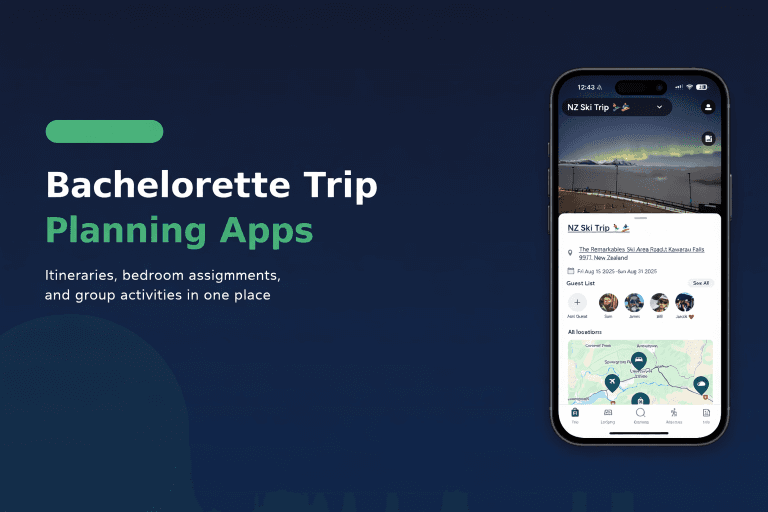
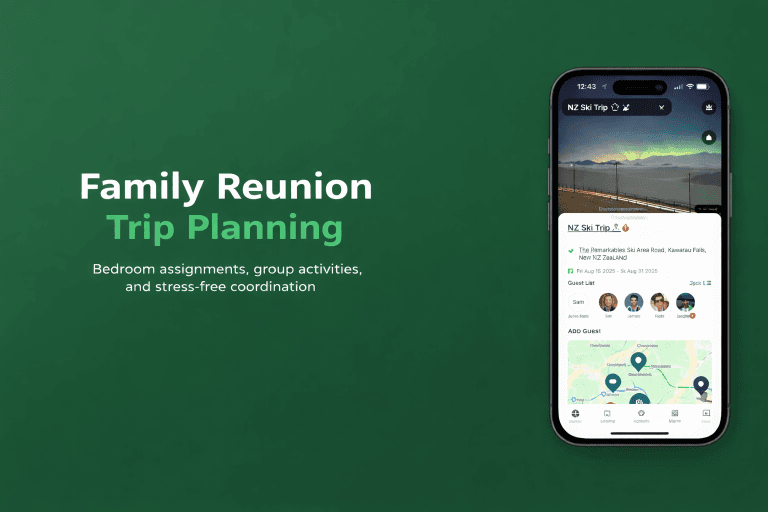
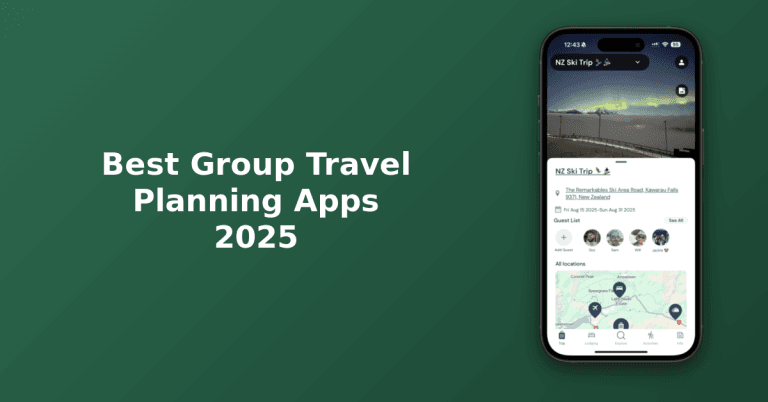
- Accommodation details — address, check-in code, WiFi password, house rules — visible to everyone, not buried in a chat
- Shared itinerary — what’s happening each day, with times and details, that the whole group can see and contribute to
- Guest coordination — who’s confirmed, who’s still deciding, who’s arriving when
- Bedroom assignments — rooms sorted before anyone shows up
- Activity bookings — things that are actually booked (not just discussed) with confirmation details attached
You can cobble this together with Google Docs, a shared note, and a spreadsheet. Plenty of people do. But in my experience, once you’re past 6-8 people, dedicated tools save real time and prevent real frustration.
When You Actually Need an App vs. When You Don’t
Let me be honest: not every trip needs an app.
You probably don’t need one if: It’s 2-4 close friends, you’re going somewhere simple, and one person is handling logistics. A group chat is fine. Keep it simple.
You probably do need one if:
- The group is 6+ people
- You’re renting a shared house or villa (bedroom assignments matter)
- The trip spans multiple days with different activities
- People are arriving at different times from different places
- There are shared costs that need tracking
- You’re the one planning and you’re already feeling the weight of “I have to organize all of this”
If three or more of those apply, a trip planning app will save you hours of coordination and prevent at least one argument about sleeping arrangements.
A Real Example: How This Played Out on a 12-Person Trip
Last year I organized a group trip to Oaxaca for Día de los Muertos. Twelve people, flying in from four different cities, staying in a rented house for five nights. Here’s what the coordination looked like:
- Before departure: Shared the house details and bedroom assignments so everyone knew their room before landing. Put the itinerary together with the key events — cemetery visits, parades, the cooking class, and the day trip to Etla.
- During the trip: People would check the shared itinerary in the morning, decide what they wanted to join, and splinter into smaller groups for the rest. Nobody had to ask me “what’s the plan” because it was already visible.
- The result: We had 12 people across 5 nights and the only logistical hiccup was negotiating with a shuttle driver to take us to Etla when the roads were blocked for the parade. That’s about as smooth as a 12-person international trip can go.
Could I have done that with a spreadsheet and a group chat? Maybe. But having everything in one app meant I wasn’t the human FAQ machine for the entire trip. People could self-serve the information they needed and I actually got to enjoy the mezcal.
The Bottom Line
Group trips are some of the best experiences you can have. But the planning is genuinely hard — not because any single piece is complicated, but because coordinating 8-15 people across schedules, budgets, accommodation, activities, and sleeping arrangements creates a lot of moving parts.
A group travel app takes the most tedious parts of that coordination and puts them in one place everyone can access. Whether you use AvoSquado, Wanderlog, TripIt, or even a well-organized Google Doc — the point is to get the trip details out of the group chat and into something that actually works.
Your group chat is for memes and hype. Your trip details deserve better.
Planning a group trip? Download AvoSquado — it’s free, handles bedroom assignments, and keeps the whole itinerary in one place. Or don’t, and enjoy scrolling back through 400 messages to find the WiFi password. Your call.